Artistic Stroll by Key Biscayne Magazine

Aside

Published by Key Biscayne Magazine – May 2013 P32

Key Biscayne Magazine

Key Biscayne Magazine

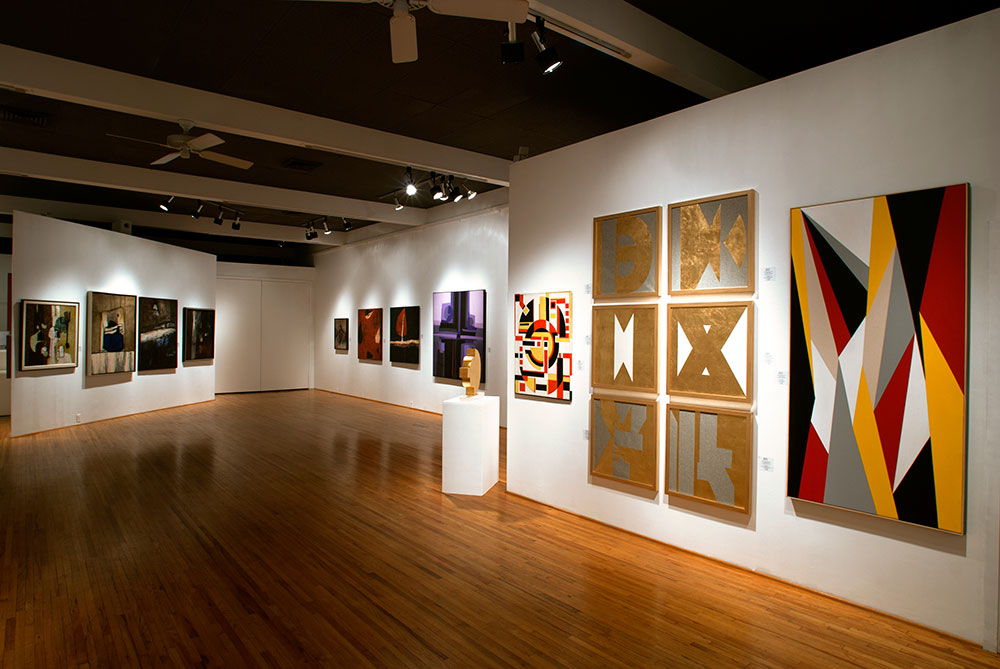
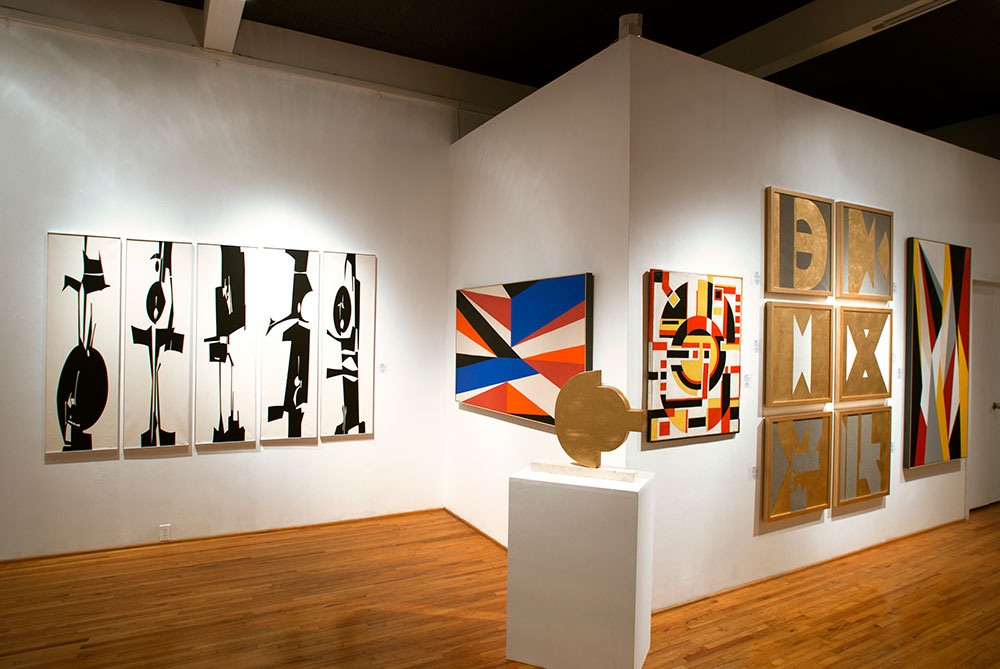
With Coral Gables Gallery Night, gallery owner Virginia Miller helps get people out of the house and into some of the city’s hottest art spaces.

Love art? Then head to Coral Gables on the first Friday of every month for the city’s Gallery Night. During this regular free event, Coral Gables’ galleries open their doors for art lovers walking or taking a free trolley as they explore, meet new and old friends, and get stimulated by new and exciting artwork. The event is the brainchild of Virginia Miller, owner of the ArtSpace/Virginia Miller Galleries, who saw it as a chance to give Coral Gables nightlife a boost and celebrate the area’s thriving art scene. It’s also a great opportunity to make new connections. In fact, Miller knows of at least 3 couples who had their first meetings in her gallery. “The human imagination is limitless, and contemporary art offers us a wonderful opportunity to expand the horizons of our creativity,”
she says; 169 Madeira Ave., Coral Gables; 305.444.4493; VirginiaMiller.com.

California Dreamin’ in Miami By Elisa Turner

Aside

Casper Brindle, Stratum 10, Acrylic, Wood, Resin, 29 x 49 x 2.5 inches, 2010, CBR5

Casper Brindle, Stratum 10, Acrylic, Wood, Resin, 29 x 49 x 2.5 inches, 2010, CBR5

ArtPulse Reviews
California Dreamin’ in Miami
By Elisa Turner

The exhibit “IMPACT: Emotions of Color” at ArtSpace/Virginia Miller Galleries in Coral Gables does indeed pack a stunning, colorful impression. Expertly hung and lit, with plenty of room for the 32 paintings by five artists to breathe so that viewers are not bombarded with a surfeit of visual stimuli, it presents the California infused work of Lisa Bartleson, Casper Brindle, Ned Evans, Andy Moses and Suzan Woodruff.

These artists are clearly heir to the ground-breaking accomplishments of California artists showcased in the much discussed recent series of exhibitions collectively titled “Pacific Standard Time: Art in Los Angeles 1945-1980.” This was a major collaboration of more than 60 cultural institutions throughout Southern California. Together, they told the story of how the Los Angeles art scene came of age, eventually to pack its own sizable impression on the art world. These exhibitions took place from October 2011 to April 2012 and were initiated by the Getty Foundation and Getty Research Institute, with programs totaling more than $11 million.

So yes, we all know now, even if we did not quite get it before, that numerous California artists have made history, including those whose names we might not have encountered in standard art books. Veteran Coral Gables dealer Virginia Miller has brought to South Florida a savory taste of the Getty initiated West Coast art extravaganza by presenting work by artists too young to be part of “Pacific Standard Time.”

And what a taste this is. You can practically taste and smell the salt in the air, bask in golden sunlight morphing into lavender sunsets, hear waves pounding, see the excellent cresting surf that has seduced at least two generations of surfer artists in Southern California. Dazzling paintings by Andy Moses, which evoke swirling ocean currents glinting with light, particularly exemplify this link between being born to surf and born to make art. Real California guys, it would seem, can do both with dashing savoir faire, thank you very much.

Born in Los Angeles in 1962, Moses grew up surfing in places such as Santa Monica and Malibu while also hanging out in the artcentric milieu of his father, Ed Moses, now celebrated as one of the pioneering California artists of the postwar generation along with Larry Bell, Billy Al Bengston, Robert Irwin, James Turrell and Ed Ruscha.

Many artists active in that time and place are grouped in the “Finish Fetish” and “Light and Space” movements unique to Southern California in the 1960s and 1970s. These movements helped put Los Angeles on the map in the art world, recasting Pop Art and Minimalism with an L.A. love for gleaming cars and motorcycles, impeccably crafted surfboards, and Hollywood’s dream-and-fantasy factory. While manifested in different ways in the work of various artists, generally these movements cultivated a focus on immaculately produced surfaces and conceptual works exploring the process of visual perception. Art of this time and place also reflected a rebellious defiance of Southern California’s military industrial complex. Additionally, a sense of California’s brilliant and quicksilver light suffused many of these artworks, as it does today in the “IMPACT” show at Art Space Virginia Miller Galleries, so clearly in synch with the Los Angeles aesthetic.

Consider, for example, Morphology 601 (2012) by Moses. It’s a riveting abstraction that brings to mind swirling ocean currents as well as a dusky cloudscape blurring gracefully into twilight, yet all the while it is clearly an immaculately smooth surface shimmering with subtle gradations of color. His Akaringa (2009), also in this exhibit, demonstrates the delicious optical illusion of physically shifting color, which he creates by ingeniously working with a concave canvas.

The luminous interchange of light and color also fascinates Suzan Woodruff, although her approach to abstraction yields a greater sense of depth than found in works by Moses. Her paintings, never betraying the expressionist messiness of brushstrokes, often give viewers the bizarre illusion that they are looking through vaporous clouds or gazing down through deepening “layers” of water in the ocean, in which the color of the water becomes darker the further it is from sunlight above sea level. Her Water Dreams (2007) evokes a compelling confluence of light, air and water. At the top of the painting, there are pale silvery green patches, catching the eye with their luxurious opalescence. These contrast with the deeper shades of blue, evoking ocean depths or indigo twilights, converging near the lower portions of the painting.

Casper Brindle, Lisa Bartleson, and Ned Evans convey a keen, if not obsessive, sense of craftsmanship in their richly colored abstractions. This craftsmanship is clearly in line with the “Finish Fetish” aesthetic of earlier California artists, yet these later artists make this sensibility their own. In Stratum 4 (2010), Brindle achieves the impressive trick of making a gleaming rectangle of saturated yellow appear both resolutely flat and somehow evocative of indeterminate depth, as if one could gaze into the mysterious recesses of golden sunlight bathing the concrete wall of a nondescript apartment building or an unearthly calm ocean at midday. A simple maple strip of wood cleanly divides this painting in half, suggesting the horizon line separating sea and sky, a horizon line ever visible to coastal dwellers enamored with sun and surf.

Lisa Bartleson, Sphere XVI, Mixed Media and Resin on Panel, 48 x 48 x 3 inches, 2011, BAR4

Lisa Bartleson, Sphere XVI, Mixed Media and Resin on Panel, 48 x 48 x 3 inches, 2011, BAR4

Bartleson’s works of mixed media and resin on panel are created with innumerable tiny rectangles of plastic positioned to form expanding concentric circles in subtle gradations of color. These rectangles form a roseate shape at the center of her work. Some suggest misty aureoles of light surrounding the moon on a cloudy night or mandalas. Scale XXXX Sphere X (2011), with silvery gray shapes blending into subtle shades of violet and blue, may even bring to mind the overwhelming spirituality conveyed by “The Rose,” a massively legendary work composed mainly of one ton of white and gray paint by San Francisco Beat painter Jay DeFeo, obsessively created during the years 1959 to 1966.

Surely the “Senior Surfer” in this bunch, Evans moved to Venice, California, in the early 1960s and fell in thrall to the area’s twin siren calls to surf and make art. He not only surfed throughout Baja California but worked with abstract painter Billy Al Bengston, whose legacy was one of many recognized by the recent spate of exhibits in “Pacific Standard Time.” At Virginia Miller are numerous examples of Evans’ gently geometric abstract paintings, perhaps recalling vertical shafts of light as they intersect and pierce mammoth cresting waves or forested mountains of the Golden State. The paintings can, at times, seem as if the artist has overworked a familiar composition. Particularly interesting in this selection is the most recent painting on panel with the intriguing shape of an elongated oval. This is Otto (2010). (Three other smaller paintings on panel from 2010
are circular-shaped.) A dynamic variation on earlier work in this exhibit, it thickly but oh-so-gracefully layers muscular striations in fleshy shades of red and orange, almost like a cross-section of sinewy muscles needed to power through both waves and paint.

A gallery exhibit showcasing California imports in the Greater Miami area inevitably leads to this question: Why don’t art venues here collaborate to tell the story of the expanding Miami art scene? Such a collaboration in Miami, says Bill DuPriest of ArtSpace/Virginia Miller Galleries, “is a logical extension of what this is all about.” Given the presence in Miami of the Knight Foundation, a major national foundation with increasing interest in the arts, it would seem that perhaps such a concept is indeed possible and could attract other significant funders. Surely no one can expect the journalism focused Knight Foundation to do all the heavy lifting that the Getty Foundation and the Getty Research Institute were recently able to accomplish with “Pacific Standard Time.”

Then again, Miami may not be quite ready or mature enough for such a bold, collaborative move. It is no doubt typical of southern California’s mighty cultural resources that the superb show “Transcultural Pilgrim: Three Decades of Work by José Bedia” at the Miami Art Museum was organized by the Fowler Museum at UCLA. This outstanding exhibit, highlighting perhaps Miami’s best known artist, runs from May 24 through September 2, 2012, at MAM, which is set to reopen in the fall of 2013 in downtown Miami’s Museum Park as the Pérez Art Museum Miami.

When the name and location of the city’s central art museum are still evolving, it looks as though the chance to make history will have to wait.
(March 2 – July 31, 2012)

Elisa Turner teaches at Miami Dade College and is Miami correspondent for ARTnews. She has written for Arte Al Día, Art+Auction, ArtReview and The Miami Herald.

Vincench vs. Vincench. A Dissident Dialogue from Cuba

Aside

By Margery Gordon
Posted on Art Districts

Jose Angel Vincench’s first solo show in the United States is a contradiction in terms-literally. Beneath a surface concern with the semantics of dissent, the paintings and sculptures installed at ArtSpace Virginia Miller Galleries defy simple definitions. Outlining charged epithets atop abstract compositions, he creates canvases that are at once bold and ethereal, direct and elusive.

Jose Angel Vincench, Dissident (Serbia): Compromise or Fiction of the Painting Series, 2009-2010, acrylic on canvas, 48” x 48” All images are courtesy of ArtSpace/Virginia Miller Galleries, Coral Gables (Miami), Florida.
A series of large square paintings, executed between 2009 and 2010 but never before exhibited, is subtitled Compromiso o Ficcion de la Pintura-which translates as “Commitment or Fiction of the Painting”-questioning the intentions and perceptions of an intermittently offensive and defensive posture. By transcribing the dictionary entries for “dissident” in 15 different dialects, the Havana-based artist raises doubts about whether any culture truly comprehends what that classification signifies or labels transgressors fairly. Whether the word is wielded as a weapon or a curse, ascribed or claimed with fear or with pride, its ramifications can be all too real.

With this multilingual approach, Vincench, who has been exhibiting his work throughout the Caribbean, South America and Europe for two decades, expands the debate about dissent from its damning implications in his home country to encompass the latest wave of protests sweeping the globe. From the ongoing agitation of the Occupy movement to the transformative violence of the Arab Spring, the political permutations span a continuum, from peaceful resistance to deadly confrontation.

Militant connotations coexist with more benign meanings, such as the secondary English synonym of “nonconformist,” which could apply to a wider range of misfits who rebel against expectations and skirt societal norms, including some who find acceptance in the art world. Expressions of individuality aren’t often well-received, not just by Communist regimes that demand uniformity, but even in a country like the United States that, at least nominally, elevates personal determinism to a national ideal.

6 “Vincench vs Vincench: A Dissident Dialogue from Cuba”, Installation view: Exile, 2011, Kraft Paper and Twine, 17” x 60” / Destierro, 2011, Kraft Paper and Twine, 19 ½” x 100” x 5 ½” / Reconciliation Tree, 2011, Incised Cedar and Steel, 50 ½” x 38 3/8” x 38 5/8”
While challenging authority takes courage, defining one’s identity by what one denounces can be just another constraint. Vincench limns this negative space by placing letters upon a base of abstraction, applying a white wash, and then removing the capitals so that only their contours remain uncovered. A sort of stencil in reverse, this process of imposing linear order on chaotic foundations, yet exposing an irrepressible interior, becomes itself a revealing metaphor. Tantalizing traces of the original colors often peer through the pure topcoat, rendering the terminology transparent and encouraging viewers to visually and conceptually see through such stereotypes. The ghostly echoes could evoke a lingering resilience, an inherited heroism or a tentative détente.

This precarious balance also applies to formal considerations. Although tethered to a denotative context, the arrangements of letters take on the quality of concrete poetry. The partially obscured preliminary paintings are exquisitely executed in an impressive range of abstract expressionist styles that include: vigorous, broad swaths of bright hues in the Serbian tongue; vibrant rivulets running through the smaller Swedish type; and dreamy marbling of the paler Polish pattern. Jackson Pollock-esque delicate trails appear appropriately calligraphic for the Chinese characters, while a denser spattering of splotchy droplets somehow seems better suited to the French flair. The Cyrillic alphabet is a stark exception in the trademark Russian solid red, a shade that also stands out among the crosshatched brushstrokes of a complementary canvas in Spanish hanging alongside.

Destierro, 2011, Cuban flag as canvas shopping bags shaped into letters of D. E. S. T. I. E. R. R. O., 19 ½” x 100” x 5 ½”, Ed. 5, and a painting of the installation.
The same Spanish message is shrunk to diminutive dimensions and draped in black paint, befitting the series title Cuba y La Noche. The name is inspired by a line from revolutionary poet José Martí, the quintessential dissident and iconic exile of 19th-century Cuba: “Two fatherlands I have, Cuba and the night.” The dark overtones impart a mysterious aura to 100 unique variations arranged in a tight grid.

That constellation of disidentes contrasts with another grouping of 20 slightly larger explorations of “exilio” stamped out of white paint. A neutral English definition-”somebody living outside own country”-alternates with a Spanish list that references expatriation, deportation and banishment. The latter, which takes the form of “destierro,” raises the harshest associations with enforced removal to a distant, solitary place-a reminder that donning the mantle of the exile can signal acceptance of an eternal curse.

Both exile and destierro are spelled out in petite paper shopping bags custom-fabricated to form block letters. The fragile capitals hang below harsh spotlights that cast long shadows like haunting memories. These are among several editions, molded last year in different materials, which allude to the rule that restricted emigrants to taking only one bag with them when leaving Cuba. In an ironic gesture toward exporting patriotism, Vincench had a set of canvas tote bags printed with blue-and-white stripes extending from the white star set in a red triangle on the initials E and D to bear allegiance to the Cuban flag.

Dissident (English): Compromise or Fiction of the Painting Series, 2009-2010, acrylic on canvas, 48” x 48”
Black Cordura nylon, most commonly used in luggage, is stitched into five carry-ons that, together, dispatch “exile,” but separately, cease to make sense. The tough fabric is also tailored into a duffel shaped like Cuba’s natural borders, complete with cylindrical companion case to represent the offshore territory Isle of Youth. Another clever version in clear plastic is packed with Cuban soil, a wistful memento of lost ground. This earthy token is but a futile attempt to stay connected to one’s origins after release into the Cuban diaspora.

Despite the sardonic tone that dominates Vincench’s internal dialogue, he does sound a hopeful note with a submission to Florida International University’s 25th-annual Festival of the Trees in Coral Gables. Displayed in the gallery, the artist’s seasonal Reconciliation Tree comprises a star-tipped pyramid of cedar bars inscribed on either side with the Spanish and English definitions of reconciliation. Fanning out from a central spoke like directional arrows on a signpost, this tree is a testament to the holiday spirit of fraternal forgiveness, suggesting the possibility of forging new pathways toward future unity.

Vincench vs. Vincench: diálogo de un disidente responsable

Aside

ESPECIAL/EL NUEVO HERALD
Publicado el domingo, 11.06.11
Por Joaquin Badajoz

Una isla tomada estará siempre contenida y definida en su a(isla)miento, como un quiste en medio de la geografía mental, una Numancia amurallada por la retórica de turno. Esa “resistencia” ya ha sido documentada por José Angel Vincench (Cuba, 1973) en una obra temprana, De la resistencia al Folklore, parte de La huella simbólica (1995); una serie en la que se define la estética del artista, entre el arte matérico e instalativo tradicional y una exploración bidimensional que podría llamarse abstraccionismo figurativo -desarrollada extensamente en collages y lienzos de No creas en la mitad de lo que oyes sino en la mitad de lo que vez (2006), Abstracto parece pero no es (2006-2007), o Paisaje Cubano. Homenaje a Jiri Kolar (2009). En esa obra finisecular, la resistencia -una palabra clave del discurso político cubano- era convertida en una espiral de hornilla eléctrica que la inventiva cubana bautizó como “resistencia”. De forma tal que lo político transformado en símbolo doméstico desmitificaba el concepto dándole otras connotaciones. La gravedad era descolocada por el choteo.

A partir de entonces, Vincench se convirtió quizás en el heredero más legítimo del arte irreverente, cáustico y contestatario de los años 80, con todo el riesgo político y estético que implica. Ese pulseo simbólico entre un discurso falologocéntrico -la lógica fálica del poder, impuesta como metalenguaje- y las narrativas sometidas, late soterrado también en la extensa muestra personal del artista cubano en la galería Virginia Miller, de Coral Gables. Pero Vincench vs. Vincench: A Disident Dialog from Cuba (Un diálogo disidente de Cuba), va un paso más allá. Más que desgastarse en el pugilismo ideológico, el artista nivela discursos, les otorga la misma importancia dentro de un cerrado universo de hegemonías, asumiendo la condición siempre subversiva y revolucionaria del arte-idea.
A la manera de Joseph Kosuth, en las piezas de arte textual que componen esta exhibición, lo vemos acorralando el significado del arte desde el lenguaje más que la apariencia -aún cuando la composición y el diseño tipográfico tengan gran importancia en su propuesta, puesto que su revelación es también un sutil juego de encubrimientos-, y manteniendo una relación crítica con la cultura y la política. La subserie Disidente (2009-2010) gira en torno a la desmitificación del término disidente -la más peligrosa de las palabras dentro de la retórica política cubana actual- y su impacto en la aldea global. Este work-in-progress incluye 14 acrílicos sobre lienzo con la definición de la palabra en diferentes idiomas, como si intentara crear una gran torre de Babel, en la que la precisión conlleva a la confusión y al caos de la glosolalia, al cosificar la palabra en mantra o laberíntico mandala tipográfico desde la imagen. Cuba y la noche (2011) es un mosaico de 100 lienzos en pequeño formato (20 x 20 pulgadas), en el que cada pieza se acopla y disiente, se aparta en su individualidad pictórica sin dejar de pertenecer a un bloque identitario.

Exile/Destierro (2011) recoge la evolución social de un concepto al que se ha despojado de su connotación política para transformarlo en emigración que esconda la violencia simbólica -y física- del desterrado. La palabra exilio es convertida en bolsas vacías de papel Craft -en la independencia de cada letra vuelve a recalcar la independencia personal imprescindible para lograr la unidad de una palabra, un concepto y hasta una nación- o la isla es transformada en “gusano”, esa pintoresca y ridícula bolsa comunitaria elaborada con tafetán negro o nailon transparente, metáfora de las pertenencias personales, la familia, la memoria, que se escapan en cada etnorragia o regresan llenas de nostalgia para alumbrar la vida económica de los que no han querido/podido partir. En esta obra matérica e instalativa, Vincench desarrolla la poética del material (nylon, papel Craft), en una cita o diálogo con Alejandro Aguilera, importante artista de los 80, ahora exiliado; recuperando su concepto de que “el tiempo histórico del símbolo es el tiempo histórico de su soporte material”. Cuba es entonces la deforme y extraña isla de tafetán y su exilio un estado de desgarramiento y vacío precario como una bolsa de papel Craft, o viceversa. Los cubanos (de adentro y de afuera) viven más que en la Era de las Tecnoutopías detenidos simbólicamente en la Edad del Tafetán y el Papel Craft.

Todas las obras expuestas forman parte de una extensa serie o línea estética que el artista ha bautizado Compromiso o ficción de la pintura, donde Vincench -que a menudo es considerado un pintor abstracto, lo que en los absurdos debates estéticos cubanos significa enajenado o descomprometido- emplaza al arte a asumir una responsabilidad intelectual, ética y artística. A asumir un compromiso social y crítico desde el arte.

Vincench trabaja y vive en Cuba. Y esto en otro contexto sería un dato prescindible, totalmente marginal. Esperemos que este excelente diálogo de disidencia no le sirva en bandeja a algún obtuso comisario intelectual la excusa para obligarlo a desertar.

Vincench vs. Vincench: A Disident Dialog from Cuba, de Jose Angel Vincench, en ArtSpace/ Virginia Miller, 169 Madeira Avenue, Coral Gables, (305) 444-4493. Hasta el 30 de enero del 2012.
Joaquín Badajoz es escritor, curador y crítico de arte. Escribe de arte para diferentes publicaciones y galerías.

Five Abstract Visions

Aside

Andy Moses, Departure at Dawn, 20 x 30 inches, 2007, Acrylic on Concave Canvas

Andy Moses, Departure at Dawn, 20 x 30 inches, 2007, Acrylic on Concave Canvas

By Margery Gordon
Published in ARTnews

The quintet of abstract painters sharing this space use distinct techniques that complement one another’s work and ultimately amplify the impact of each individually.

The compositions of Andy Moses and Linda Touby share a motif of horizontal bands of color. Touby’s thick swaths of primary and earthy hues come together in rough edges that reveal distressed layers. This ongoing series, titled “Homage to Giotto,” evokes the texture of eroding frescoes. In contrast, Moses (son of Los Angeles painter Ed Moses) applies aerospace paints in thin strokes to create subtle gradations of color that achieve a shade-shifting effect, especially on the concave surfaces of Departure at Dawn (2007) and Nocturne Latitude 20 30 03 (2008).

While those works hint at aeronautical views, this subject is treated more literally in the fluorescent-tinged paintings of Florian Depenthal, a German glider pilot. Some of his paintings’ vertiginous angles and mysterious forms are inspired by his airborne perspectives of the earth’s planes and by everyday shapes distorted by distance. His recent bright canvases give way to the dark, moody 1995 gem Fellow Conspirator, which is tucked into a back corner to allow for solitary contemplation.

Michelle Concepción paints mysterious dreamscapes resembling blood platelets enlarged under a microscope. A video documents how she delicately drips semitranslucent acrylic pigments onto canvas, letting the biomorphic blobs change color as they drift across one another in ever more layers. This engagement with the accidental contrasts with Aaron Karp’s optical illusions, exuberant works featuring celestial shapes overlaid with painted screens that look like raised rectangles. The resulting wavy grids make the saucers and stars in Cuchara Dancer (2004) and Dry Smokey (2004) appear three-dimensional.

This smartly curated show lets each artist shine individually while highlighting the subtle connections linking their diverse styles.

Joyas Latinoamericanas

By Janet Batet
Posted in Art Pulse Magazine

Under the suggestive title “Joyas Latinoamericanas” (Latin American Jewels), Art Space Virginia Miller Galleries, in Miami, offered us a balanced account of the contemporary art in the region. The presence of great figures, such as, José Clemente Orozco and Francisco Toledo (Mexico); Gina Pellón and Wifredo Lam (Cuba); Ramón Oviedo (Dominican Republic); Elmar Rojas (Guatemala), coexists in frank dialogue with mid-career artists like Michelle Concepción (Puerto Rico), Marco Tulio (Colombia), Humberto Castro (Cuba), Mateo Argüelles Pitt (Argentina), Enrique Campuzano and Soledad Salamé (Chile), Sergio Garval (Mexico).

Passing the threshold of the gallery, the viewer is challenged by a small vibrant jade green rareté. Untitled, 1978, Gunther Gerzso (Mexico, 1915-2000) arouses particular interest. This lovely painting is unusual due to its small size (only 6 ½ x 6 ½ inches). Gerzso’s pictorial universe is characterized by the use of space as a dramatic compositional element. Consequently, the medium or large-scale emphasizes the monumental nature of his proposal. It is a universe dominated by the geometric abstraction, where greens, ochres and blues create enigmatic compositions: architectural structures that seem inspired by the colossal pre-Columbian Mexican heritage; topographies of the vast and disparate Mexican landscape where woodlands, sea and desert become unfathomable forces and archetypes of the soul.

El Cano mudo, 1993, is a fury. The imposing expressionist painting by Arnaldo Roche-Rabell (Puerto Rico, 1955) captures our attention at once. A whirlwind of strident, hurtful yellow lines, takes us into the excitement and frenzy of a cockfight, where everything is dominated by passion, that passion that only stops at death. The canvas appears as a snapshot of the climax moment of the fight where individuality disappears to embody one unique entity, a single delusional force: tremendous, fiery, fatal. Roche-Rabell’s artworks are the result of the tremendous collusion -and collision- between the popular imagination and reality. The rites and traditions of the Borinquén become a metaphorical point of departure for the tireless scrutiny of the forces, fears and passions of man.

Sharing the same room, in an obvious face-to-face contrast, highlights the almost mystical quietness of On the Center: A Tree, 1990. This canvas is the expression of a fundamental concern, which has guided Antonio Henrique Amaral’s artistic production over the years: the devastating and disastrous deforestation of the Amazon. The tree in the center is almost a deity, an object of worship, an animistic force and the pinnacle of the history and culture of one of the world’s last natural places of refuge. The oppressive metal teeth of the saw fence act as a threatening decorative border, which irreverently menaces the survival of core values: our nature and mystic legacy.

Soledad Salamé (Santiago, Chile, 1972) delights us with her very eloquent video Fusión (Fusion), a testimony to her environmental interests – the poetic and continually changing abstract compositions generated by the constant flow of rhythm in the song of life: the precious nature of water presented as a vital, animated element and a metaphor for memory and remembrance. This ecological interest has guided Salamé throughout her entire career, appearing as a recurring element in her paintings, photographs, videos and sculptures. Concerns like global warming, contamination, and solar energy distinguish her very contemporary poetics. Her fascination with time – another essential, natural component latent in all her works – finds perfect fulfillment in her multimedia artwork, where rhythm, sequence and interdependence speak to the interrelatedness of the world we inhabit.

“Joyas Latinoamericanas” is a balanced, interesting selection, as well as a graceful polyphony of the contemporary art of the region.

Visiones abstractas: cinco caminos a la imaginación

By Janet Batet
Published by El Nuevo Herald

Aaron Karp, Cachara Dancer, acrylic on canvas, 52x48 inches, 2004

Aaron Karp, Cachara Dancer, acrylic on canvas, 52x48 inches, 2004

El Arte abstracto como lenguaje visual tiene la peculiaridad de haberse desprendido del pesado fardo de la representación visual. Así, línea, color y textura se confabulan para crear universos disímiles donde el espacio y la tensión entre elementos constitutivos es fundamental. Del efectivo manejo de estos componentes, depende definitivamente el éxito de la obra abstracta y su poder evocador.

Five Abstracts Visions (Cinco visiones abstractas) es el título bajo el cual la galería ArtSpace/Virginia Miller, con sede en Coral Gables, nos ofrece las visiones de cinco pintores abstractos con propuestas bien diversas. La exposición constituye una oportunidad para acercarse a artistas en plena expansión de sus carreras cuya pasión por la abstracción los ha llevado a la creación de propuestas bien personales y sugerentes.

Andy Moses (Los Angeles, 1962) and Michelle Concepción (Puerto Rico, 1970) parecen interesados en explorar la abstracción como desafío a la limitación natural de la pintura: su bidimensionalidad. Ambos juegan con las nociones de profundidad y movimiento exigiendo un espectador activo y los dos están interesados en la exploración del cosmos.

Michelle parece atraída por la microescala. Sus pinturas parecen vistas obtenidas a través de un microscopio que nos permite acceso al mundo insospechado de organismos unicelulares, protozoarios, que se acompasan en grácil movimiento. La obra de Moses, en cambio, participa del denominado flow painting, una pintura interesada en la impresión de movimiento continuo o flujo. Moses se vale de pintura traslúcida y perlada. El tiempo de preparación del pigmento es esencial así como la viscosidad que va ganando el mismo. Todo ello, aunado a la luz –en tanto elemento constitutivo de la obra– genera una composición siempre cambiante. A ello contribuye el uso de la superficie cóncava que amplifica la sensación de fluido que el espectador experimenta mientras se traslada de un extremo a otro de la obra. Inspirado en fenómenos físicos y naturales, la obra de Moses es una experiencia gratificante.

Florian Depenthal, 54 x 42 inches, Shattered Splendor, 1993, Oil on Canvas

Florian Depenthal, 54 x 42 inches, Shattered Splendor, 1993, Oil on Canvas

Por su parte, la propuesta de Aaron Karp, pintor americano que ha vivido en Nuevo México por más de 30 años, nos introduce en un complejo entramado multicolor. Copioso tejido potenciador de ritmos y combinaciones cromáticas riquísimas, los cuadros de Karp son el pasaje propicio a mundos de ensoñación donde el elemento lúdico destaca. Sus lienzos parecen por momentos fabulaciones arquitectónicas: cúpulas caprichosas de ascendencia morisca o complejos mosaicos. Otras veces, el elemento musical se impone por el juego con el tempo –armónicos y disonancias– que anima su obra.

Por último, las propuestas de Florian Depenthal y Linda Touby encuentran como punto de comunión el rejuego con el elemento textural en tanto medio expresivo fundamental.

Linda Touby, Homage to Giotto 414, Oil and Wax on Canvas, 56 x 56 inches, 2009

Linda Touby, Homage to Giotto 414, Oil and Wax on Canvas, 56 x 56 inches, 2009

Los deslumbrantes lienzos de Florian Depenthal (Karlsruhe, Alemania, 1955) denotan una alta carga expresiva. El pigmento es aplicado con espátula dejando la huella enfática del estado anímico que motiva cada trazo. El artista, sin embargo, a ratos se detiene en pequeños detalles, raspando aquí y allá con el mango del pincel, dejando pequeñas notas cifradas dominadas por un acento íntimo. Los títulos dejan a veces entrever conexiones con el mundo real que inspira al artista. Tal es el caso de Splendor (Esplendor), 1993.

Al adentrarse en la sala, el espectador queda cautivo de la obra de Linda Touby (Nueva York, 1946). Su propuesta engrana en la tradición del expresionismo abstracto americano, lo mismo que su formación. Touby estudió en la Art Students’ League (Liga de Estudiantes de Arte) de Manhattan teniendo como compañero de clases a Richard Pousette-Dart, uno de los miembros más jóvenes de la Escuela de Nueva york. De proporciones medianas, la colosal propuesta está impregnada de una fuerza evocadora impresionante que nos transporta a través del tiempo y la Historia del Arte hasta la Edad Media tardía. Su más reciente serie Homage To Giotto (Homenaje al Giotto), es el resultado del paciente estudio de la obra del maestro italiano.

Andy Moses, 20 x 30 inches, Departure at Dawn, 2007, Acrylic on Concave Canvas

Andy Moses, 20 x 30 inches, Departure at Dawn, 2007, Acrylic on Concave Canvas

La serie destaca en primera instancia a nivel táctil. Touby ha logrado recrear la sensación de la pintura al fresco. Este procedimiento pictórico mural a base la cal y pigmentos minerales fue empleado desde la Antigüedad. De gran resistencia al paso del tiempo, debemos a esta técnica una parte considerable del legado artístico que llega a nuestros días. Avida investigadora del color y las posibilidades de los pigmentos, Touby consigue recrear la peculiar atmósfera del fresco a partir del óleo y la cera. La artista selecciona meticulosamente los colores empleados atendiendo a la técnica recreada y a la paleta del artista homenajeado en la serie.

Michelle Concepción, Blue across with yellow and orange, 59 x 39.25 inches, acrylic on canvas, 2007

Michelle Concepción, Blue across with yellow and orange, 59 x 39.25 inches, acrylic on canvas, 2007

Su obra participa de un rejuego con la historia, fabulando con la abstracción y la figuración. De gran nivel alegórico, sus tranquilas composiciones de franjas horizontales de colores de evocación mineral, nos traen de regreso a un paralelo más cercano (muchos son los que ven en la obra de Touby la presencia de Rothko). Es curioso como la artista ha logrado desde el lenguaje abstracto, resumir el hálito subyacente en la obra figurativa de Giotto a través de la simulación de la técnica, la cuidadosa selección del color y el trabajo por franjas que nos recuerda el uso fragmentado del plano en el maestro italiano como sugerencia de perspectiva.

Five Abstracts Visions es una travesía agradable para el ojo avisado y para el amante general del arte, uno de esos viajes que no deberíamos privarnos.

`Five Abstracts Visions’, en ArtSpace/Virginia Miller Galleries, hasta el 20 de febrero, 169 Madeira Avenue, Coral Gables, 33134. http://www.virginiamiller.com, (305) 444-4493.

Christian Science Monitor Features Marco Tulio

Marco Tulio, Untitled, 57 x 64 1.4 inches, 2007, Oil on Canvas

Marco Tulio, Untitled, 57 x 64 1.4 inches, 2007, Oil on Canvas

A major article in the Christian Science Monitor (The heart of Latin art By Gloria Goodale) on the unprecedented number of major exhibitions of Latin American art around the nation features a painting by Marco Tulio and quotes a museum director who singles it out as an example of magical realism.

La Montera” (The Bullfighter’s Hat”) depicts a pensive young woman draped in a sheet, seated in a bullfighting ring. Near her are flower petals and the toreador’s cap. His cape is draped across a nearby barrier. Looking on are two sinister characters, one holding a scythe.

The painting is one of the six loaned by ArtSpace/Virginia Miller Galleries to the Naples Museum of Art for its “Latin American Painting Now” exhibition of works by 50 artists being shown until Jan. 10th. The newspaper article states:

“The contemporary Latin American artists on display at the Naples (Fla.) Art Museum vividly carry forward many of the characteristics that have traditionally defined Latin art. ‘Vibrant colors, figurative imagery, and a joyful embrace of everyday objects,’ says director Michael Culver.

“He points to such artists as Marco Tulio, whose work ‘The Bullfighter’s Hat’ offers a contemporary spin on traditional elements of Latin American art. ‘He paints like the old masters with layers on layers that create a fine, wonderful surface that looks immaculate – almost like a photo – but also almost surreal in the way he places the object,’ says Mr. Culver, adding that it also evokes another traditional Latin theme — magical realism, in which simple objects take on meaning.”

Other paintings from the gallery loaned to the Naples exhibition are by Alfredo Arcia, Humberto Castro, Michelle Concepción, Ramón Oviedo and Elmar Rojas.

The Art of Recession at Virginia Miller Galleries

Joyas Latinoamericanas

Joyas Latinoamericanas

‘Straw turns to gold in the Gables’
By Carlos Suarez De Jesus,
published: June 18, 2009, Miami New Times

Leave it to Virginia Miller to find the silver lining in an economic storm.

Despite the tribulations of the art world in an increasingly stagnant sales environment, the Coral Gables dealer is putting on an eclectic summer group show. Just don’t call it a clearance blowout, please.

Where most dealers wouldn’t dare exhibit the work of masters alongside that of relative unknowns, Miller welcomes the risk with aplomb in “Joyas Latinoamericanas,” an exhibit including paintings by titans Wifredo Lam and José Clemente Orozco smack next to whippersnappers such as Marco Tulio and Sergio Garval.

The show features mostly paintings, by more than a dozen Latin American artists, spanning nearly 80 years. It’s presented in a cavalcade of styles that blend surprisingly well thanks to Miller’s deft eye.

Miller says that because of the recession, private owners are offloading long-cherished works, in some cases masterpieces, offering the general public a chance to see art previous off-limits.

Among the highlights of the exhibition is a 1930 oil-on-canvas titled Dama Sofisticada (Sophisticated Dame), created with rough, slashing strokes by the late Mexican muralist Orozco. The hardcover-size work depicts a peasant woman whose face is seen from a side view and loosely rendered in thick, irregular red, orange, and turquoise daubs of paint. Her tangled raven tresses are suggested by a tarry black wash.

Also on view is a handful of Lam paintings, including an unusual early gouache-on-cardboard from 1942. Lam, who freighted his paintings with rich Afro-Cuban symbolism, evokes a tenebrous penumbra of light and darkness in a 1970 three-foot oil-on-canvas — depicting a totemic, stylized bird — that exudes a mysterious, almost primitive veneer.

Lam’s eerie fowl nearly suffers by comparison next to Arnaldo Roche Rabell’s painting of a fighting cock. The dynamic bed sheet-size expressionistic work bristles with a rustic barnyard vibe. El Cano Mudo is rendered in a dizzying swirl of yellow, orange, red, purple, and blue tones that powerfully rip across the canvas to convey a sense that the rooster is about to burst from the surface. The Puerto Rican painter’s opus seems scratched out from sun-baked soil.

Across from it, Guatemala’s Elmar Rojas is represented by three oils from 1991 that refer to the folklore of his homeland. The artist furiously works over his canvases with paint and then repeatedly sands them down until their bright, bejeweled surfaces feel like kid lamb Gucci leather to the touch. One of these works, ironically titled El Gran Consejo de Espantapájaros (Grand Counsel of Scarecrows), depicts what appear to be shamans gathered at a seashore. It’s a stunning tropical palette reminiscent of Rufino Tamayo’s work.

Another artist who seduces the senses is Brazil’s Antônio Amaral, whose phosphorescent, five-foot canvas, On the Center: A Tree, offers a stinging commentary on the rapacious deforestation of the Amazon. The painting’s edges are surrounded by a menacing rusty sawtooth border buzzing into an inner tree canopy of lush emerald leaves that frame a solitary burning tree trunk. The trunk glows bright red at the center of the composition. Its branches are tipped by billowing clouds of smoke.

Among the younger, mid-career artists on display is Argentina’s Mateo Arguelles Pitt, who often uses pugilists in his whimsical, deceptively simple paintings as a metaphor for confronting the challenging vagaries of life. One of his large mixed-media-on-panel works, Miércoles 3 (Wednesday the 3rd), portrays a Lilliputian palooka standing in front of a heavy punching bag that dwarfs him. The boxer is unfazed and holds outs his mitts as if ready and eager to tackle his daunting exercise and deliver a knockout blow.

Mexico’s Sergio Garval also packs a punch. His wall-swallowing, lavishly textured painting The Cord features a woman trying to balance herself like a trapeze artist on a stack of ornate furniture floating in a dazzling mother-of-pearl-hued void. The artist seems to be hinting at overcoming adversity against the odds.

Garval’s work is among the most beguiling on exhibit, drawing the viewer like a moth to a flame. An arresting charcoal-on-canvas painting titled The Corporation-Reconstructing Eden is remarkable for its exquisite execution and the haunting imagery of a dystopian world. It shows the burned-out shells of cars crowned by rotting potted plants and zombie-like people walking atop the rusted hulks while dreaming of re-creating paradise anew. The work’s discomfiting tones convey notions of the automobile industry in crisis or the aftermath of a natural disaster.

While at the gallery, slip into the rear storage area for a glimpse of Marco Tulio’s eerie, almost operatic vision of the consequences of a bullfight gone awry. In La Montera, the matador is nowhere to be seen, but a naked young woman, cocooned in a white shawl and sporting a sardonic grin, kneels in the ring. Behind her, two dastardly oafs, with malice dripping from their lips, leer at the clueless girl. One of the men hides a scythe behind his back as if contemplating severing her head. The self-taught Colombian artist, whose parents are both painters, has an incredibly gifted hand and quite an eye for heightening the sense of drama in his images.

On the way out, don’t miss Mexican master Gunther Gerzso’s luminous abstract geometric painting, measuring slightly larger than your average postcard and dating from 1978. The rare and precious gem makes a compelling argument for visiting the gallery’s trove — not to mention witnessing Miller’s knack for turning a potentially straw proposition into gold.

Colombian Surrealist Marco Tulio


ArtSpace/Virginia Miller Galleries regularly exhibits the work of Colombian painter Marco Tulio in its group exhibitions of Latin American artists as well as at such expos as the 2008 Bridge Art Fair during Art Basel Miami Beach and at Arteaméricas, the annual Latin American art fair.

Tulio’s stylized, surrealistic paintings have been described as “magic realism” reminiscent of the literary works of his countryman, Gabriel Garcia Márquez.

Rod Drown, editor and publisher of the popular blog “Muse Views,” writes that Tulio “achieves a quality of heightened reality. He has a refined skill at presenting archetypal forms within the painting that, although subtle and nuanced, are accessible to close observation.”

Drown goes on to describe the three triangular shapes that form the composition of one of Tulio’s paintings, and notes that “in Buddhist philosophy, geometry and symbolism are the means whereby all spiritual facts are expressed, and through which they are to be interpreted. The set of three is the triad in which is expressed the triple nature of the manifested soul” and that whether or not the artist composed the painting in this manner, “Tulio’s discerning use of geometry and symbolism characterizes his mental state,” which he suggests was “a religious state of mind—and, in a sense, (he) painted an icon.”

At the conclusion of his lengthy article, Drown observes that in recent years, Tulio did a number of paintings for the Vancouver Opera Society. Several of them, including works depicting leading characters from “Madame Butterfly” and “A Masked Ball,” are included here